





Why Continuous Insulation on Exterior Sheathing Matters
If you’ve heard the term continuous insulation (CI) but never really dug into it, here’s the simple version: it’s insulation that runs across the entire exterior of a wall, not just between the studs.
And that difference matters more than most people think.

The Issue With Traditional Walls
Most standard wall systems insulate between studs. The problem is the studs themselves don’t insulate well, so heat still moves through them. These “shortcuts” are called thermal bridges, and they quietly reduce the overall performance of the wall—even when the cavity insulation is doing its job.
What Continuous Insulation Fixes
Continuous insulation creates a steady, uninterrupted layer on the outside of the wall. Instead of heat jumping through framing members, it has to pass through a consistent thermal barrier.
That leads to:
- Less energy loss through the wall
- More stable indoor temperatures
- Better overall wall performance without changing interior space
What Exterior Sheathing Is The Solution
When CI is added directly to exterior sheathing, you’re improving a key part of the wall assembly in one move. It helps reduce thermal bridging right at the source, keeps the sheathing warmer (which helps with moisture control), and improves long-term durability.
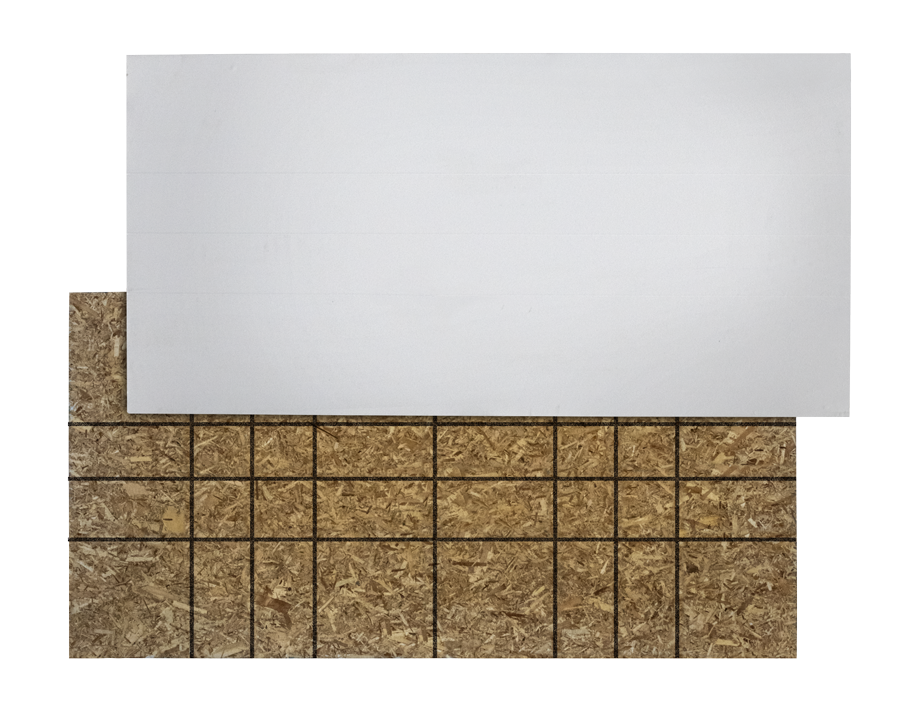
A simpler way to do it: DRICORE® X-TERIOR ci™
DRICORE® X-TERIOR ci™ combines structural OSB sheathing and continuous insulation into one panel, so you’re not layering multiple materials on site.
That means fewer steps, more consistent coverage, and less chance of gaps or installation errors.
Bottom line: Continuous insulation on exterior sheathing is one of those upgrades that quietly makes a big impact. It improves efficiency, reduces weak points in the wall, and simplifies construction when it’s built into a single system.
Buy now at Home Depot Canada.