






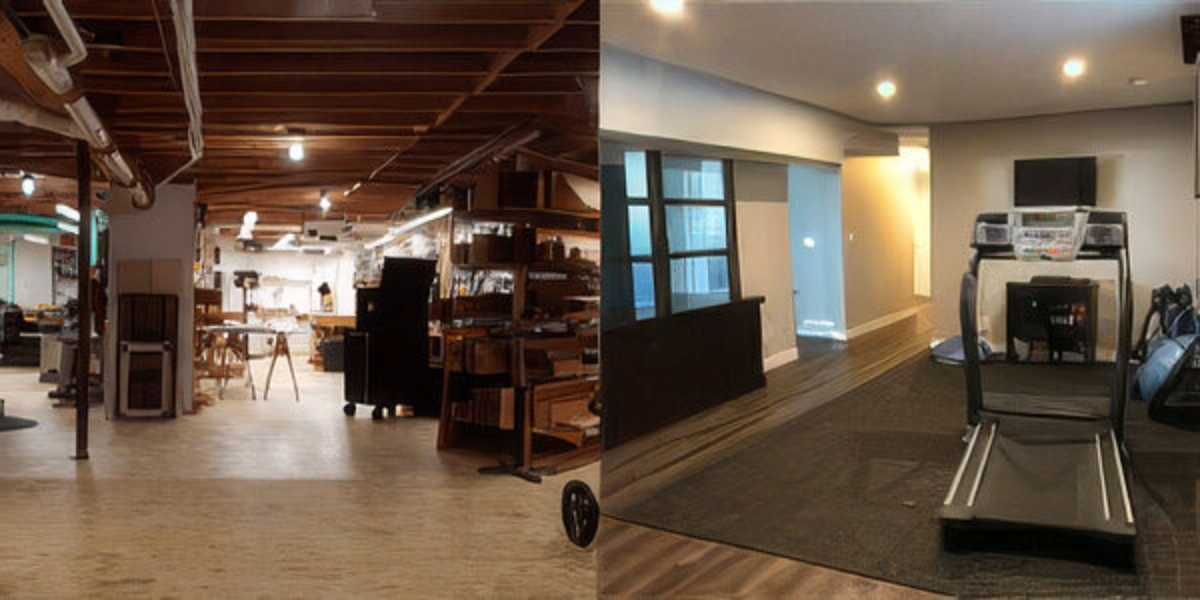

Earlier this year, Better Built Basements (BBB), a custom basement remodeling contractor in Berlin, Connecticut, started using DRICORE® in their basement solutions for clients. “As far as flooring goes, DRICORE® is the only subfloor we use,” says Chris Hueble, a design consultant with BBB. “Before DRICORE came along with DRICORE SMARTWALL®, we had always done traditional stick framing. But we switched to DRICORE® SMARTWALL® and it has cut our installation time in half.” We sat down with Hueble and asked him what we need to know before, during and after a basement renovation. Here is a compilation of his top seven contractor tips for basement renovations.
1. The basement is a smarter way to expand your living space than other renovations.
“The great thing about the basement is that it’s space that’s already there,” says Hueble. “It’s already a part of the footprint of your house. As opposed to doing an addition where you’ll pay a hefty amount in add-ons, you can do a basement for a fraction of the cost.”
2. Assess your living space needs and renovate the basement accordingly.
Finishing your basement can provide extra living space such as a playroom for the kids, an exercise room, a quiet home office and so much more. “The biggest thing right now is playrooms,” says Hueble. “We get requests for man caves and in-law suites but recently, I found that you go into someone’s house and their living room looks like a playroom. Obviously, that’s when you know they’re looking to add more space so they can reclaim their other living space.”
3. Space challenges can be design opportunities.
Drop ceilings are not the only option for a basement ceiling, says Hueble. If your utilities are located in awkward spots or are spread out across a room, consider built-ins like hidden bookshelf doors, or other features to blend them into the space. “At BBB, we have to get creative with framing, customization, access panel doors and we can even do our own stairs.”
4. Hire a contractor who specializes in basements renovation whenever possible.
“I always caution people about using a company that doesn’t specialize in basements,” says Hueble. “Basements are a different animal. I can’t tell you how many times I’ve gone into a basement where it did not look right because it wasn’t done by a professional basement company. Or worse yet, someone got in over their head and realized it was a bigger project than they thought it was.”
5. Moisture is a basement’s worst enemy. Choosing the right subfloor is an extremely important part of the process.
Subfloors are a great way to help keep finished flooring stay dry and feel warmer. Basements are below grade, so they’re prone to humidity, says Hueble. “We recommend DRICORE in many instances when people are concerned about putting something on concrete.”
6. Continue the look and feel of your main floor to the basement for consistency.
Hueble says basement designs should feel like an extension of the upstairs. That being said, BBB usually recommends keeping some unfinished space in the layout of the basement for storage and to house utilities.
